
Deciding whether to renew your lease or move is primarily a math problem wrapped in lifestyle choices. Staying makes sense if your current rent is below market rate even after an increase, while moving is better if the savings outweigh the hassle and upfront costs of relocation. Ultimately, the right call balances your budget against your need for stability and comfort.

The Key Factors to Weigh Before Deciding
Before you panic over a renewal notice or start scrolling Zillow, you need to look at the hard numbers alongside your soft needs. The decision isn’t just about the monthly rent check; it’s about the total cost of ownership for the next 12 months.
Cost of Staying vs. Cost of Moving The most obvious factor is the rent increase. Landlords often raise rates by 3% to 7% annually based on inflation and market demand. However, if you move, you aren’t just trading rent amounts. You are facing a “first and last month” deposit requirement at the new place, plus a security deposit. You need to compare the 12-month cost difference of the new rent against the immediate lump sum you’ll need to pay to move.
Comfort, Location, and Lifestyle Factors Money isn’t everything. Consider your commute time, proximity to work, and neighborhood safety. If your current apartment has a great gym, laundry on-site, or a walkable grocery store, leaving that convenience might cost you more in time and transportation than the rent savings would offer. Conversely, if you’ve outgrown the space or your job commute has become unbearable, the quality-of-life upgrade might justify the moving expense.
Lease Terms and Negotiation Potential Sometimes the rent is the same, but the terms change. A new lease might add strict guest policies, pet fees, or parking rules that didn’t exist before. Review the proposed renewal carefully. If the terms are fair and the landlord is responsive, staying is low-risk. If the landlord has been unresponsive to repairs, a new lease locks you into a difficult relationship for another year.
How Much Does Moving Out Actually Cost?
Renters often underestimate the hidden costs of moving. In 2026, inflation has pushed labor rates and supply costs up, meaning a local move is rarely just the price of a truck rental. You must account for the “cash flow hit” of paying for two homes simultaneously during the transition.
Here is a realistic breakdown of what moving out costs in today’s market:
| Expense Category | Low End Estimate | High End Estimate | Notes |
|---|---|---|---|
| Moving Truck Rental | $150 | $450 | One-way vs. round trip; fuel included? |
| Professional Movers | $600 | $2,000 | 2-3 movers for 4-8 hours; hourly rates vary |
| Moving Supplies | $100 | $300 | Boxes, tape, bubble wrap, blankets |
| Security Deposit (New) | $1,200 | $3,000 | Usually 1-2 months’ rent upfront |
| First Month Rent (New) | $1,500 | $4,000 | Required before move-in |
| Last Month Rent (Old) | $1,500 | $4,000 | Final payment to current landlord |
| Application/Credit Fee | $50 | $150 | Per unit, per applicant |
| Utility Transfer/Setup | $100 | $300 | Deposit for electricity, water, internet |
| Cleaning Services | $150 | $400 | Professional move-out cleaning |
| Time Off Work | $0 | $500 | Lost wages for 1-2 days of packing/moving |
| Total Estimated Cash Out | $4,350 | $20,750 | Does not include ongoing rent difference |
Hidden Fees and Stress Costs Beyond the line items above, consider the “lost productivity” cost. Moving takes hours of packing, driving, and unpacking. If you take two days off work, that’s lost wages. Additionally, utility setup fees often require deposits if you haven’t lived in the area before. There is also the stress factor; moving disrupts routines, which can impact work performance and mental health.
The Break-Even Point To justify moving, the monthly rent savings must cover these upfront costs. If moving saves you $200 a month, it will take over 20 months to recoup a $4,350 moving cost. You need a savings of at least $300–$400 per month to make the move financially viable within a single lease year.
Is Your Rent Increase Worth Fighting?
Receiving a renewal notice with a higher rent figure is standard, but it doesn’t mean you have to accept it immediately. Landlords prefer to keep good tenants because vacancy costs them money in marketing and lost rent days.
Evaluating the Increase vs. Market Rate First, check if the new rate is actually higher than the market. Use sites like Zillow, Apartments.com, or local rental listings to see what similar units in your building or neighborhood are asking. If your landlord wants $2,400 but identical units are listing for $2,200, you have leverage. If the increase is within the 3%–5% range typical of inflation, pushing back might be harder.
Negotiating a Renewal Landlords respond to reliability. If you pay on time, keep the unit clean, and have been a long-term resident, remind them of that. You can ask for a rent freeze, a smaller increase, or minor upgrades in exchange for signing a longer term. For detailed strategies on how to approach this conversation without sounding demanding, check out our guide on how to negotiate rent.
When to Walk and When to Push Back If the increase is a flat 10% or more, it is often a signal that the landlord intends to reset the price to current market value. In this case, pushing back might only delay the inevitable. However, if the increase is modest, negotiating can save you hundreds over the year. If they refuse to budge and the price is significantly above market, it is often time to start looking elsewhere.
When Renewing Makes Total Sense
Sometimes the math clearly favors staying put. Renewing is the smart choice when the stability provided by your current home outweighs the marginal savings of a new location.
- You’re Below Market Rent: Even after a 5% increase, if your rate is still lower than current listings, you are winning. Locking in a below-market rate for another year is a financial victory.
- Moving Costs Exceed Savings: If the cost to move is $5,000 and the new apartment saves you $200 a month, you lose money for the first 20 months of your tenancy.
- Job Stability and Community: If you have a stable job nearby or are in a specific school district, the cost of a commute or school transfer can wipe out rent savings.
- Landlord Relationship: If your landlord fixes issues quickly and responds to emails, that reliability is worth a premium. A new landlord might be more distant or difficult.
Before signing, ensure you understand every clause in the new document. You can find a detailed breakdown of common lease clauses in our apartment lease agreement explained guide.
When Moving Out Is the Better Move
Despite the hassle, there are scenarios where moving is the only logical choice. If your current living situation is actively damaging your financial or mental well-being, staying is not an option.
- Extreme Rent Increases: An increase of over 10-15% is often a red flag. It suggests you are being priced out or the landlord is aggressively resetting rates.
- Unresolved Apartment Issues: If you have reported mold, pests, or heating issues that haven’t been fixed, a new lease locks you into that problem.
- Life Changes: A new job in a different city, a growing family needing more space, or a desire for a different lifestyle (like a pet-friendly building) are valid reasons to move.
- Better Deals Nearby: If you can find a comparable unit for significantly less money nearby, the long-term savings justify the short-term pain.
If you are considering a move, you need to be sure you can afford the new place. Use our tool on how much rent can I afford to ensure the new lease aligns with your budget. Additionally, if you are on the fence because of market trends, read our renting vs buying comparison to see if owning might be a better long-term play for your situation.
How to Negotiate Your Lease Renewal Like a Pro
Negotiation starts before you even get the renewal offer. You want to be the tenant the landlord doesn’t want to lose, not the one they are trying to replace.
Start the Conversation Early Begin talking to your landlord 60 to 90 days before your lease ends. This gives them time to process your request without the pressure of an imminent vacancy. If you wait until the last week, they are more likely to stick to their initial number.
Research Comparable Rents Don’t negotiate blind. Have three or four links to similar apartments in the area ready to show them. This proves you aren’t just asking for a discount; you are offering a competitive market rate.
What to Ask For
- Rent Freeze: “Can we keep the rate at $2,000 for another year?”
- Minor Upgrades: “If we stay, can you install new flooring or fresh paint?”
- Parking/Pet Clause: “Can we add a parking spot without a fee increase?”
- Longer Term: Offer to sign for 18 or 24 months in exchange for a lower monthly rate.
What Not to Do Never threaten to move out immediately unless you are truly ready to do it. Landlords can sense bluffing, and it damages the relationship. Be polite but firm. For more scripts and tactics, see our how to negotiate rent article.

How to Give Notice If You’re Moving Out
If you decide the new place is better, or the renewal terms are unacceptable, you must handle the exit professionally to protect your security deposit.
Typical Notice Periods Most leases require 30 to 60 days of written notice. Some require 90 days for longer leases. Check your original contract immediately. Giving notice late can result in being charged an extra month’s rent.
How to Write a Notice to Vacate Your notice should be written, dated, and include your move-out date. It should state that you are not renewing the lease. You can use a notice to vacate letter template to ensure you include all legally required information for your state.
What Happens to Your Security Deposit After you hand over the keys and the apartment is inspected, the landlord has a specific window to return your deposit. In many states, this is 14 to 30 days. If they deduct for damages, they must provide an itemized list. Review the security deposit return timeline to know exactly when you should expect your money back and what deductions are legal.
Timeline: Notice → Move-out → Deposit Return
- Day 1: Send written notice.
- Day 30-60: Final move-out day.
- Day 31-90: Landlord inspects and returns funds (varies by state).
- Day 91+: Follow up if funds are not received.
Lease Renewal Checklist: Before You Sign Anything
If you decide to stay, do not sign the renewal until you have reviewed the document. Landlords often sneak in changes to the terms, not just the price.
- Review Every Clause That Changed: Look for new fees, stricter guest policies, or changes to maintenance responsibilities.
- Confirm Move-Out Procedures: Ensure the rules for returning the unit (cleaning, carpet replacement) haven’t become stricter.
- Check for New Fees: Watch for new administrative fees, pet rent increases, or parking fees that weren’t there before.
- Get Verbal Promises in Writing: If the landlord promised a new dishwasher or a rent freeze, it must be in the lease addendum.
Don’t assume the new lease is identical to the old one. Use our apartment lease agreement explained resource to verify the terms are standard and fair before you commit.
FAQ
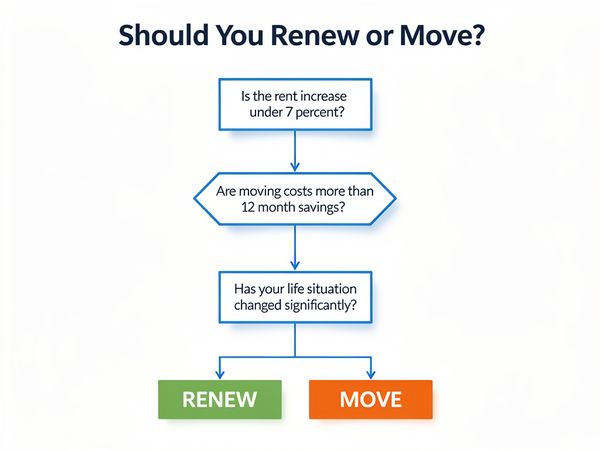
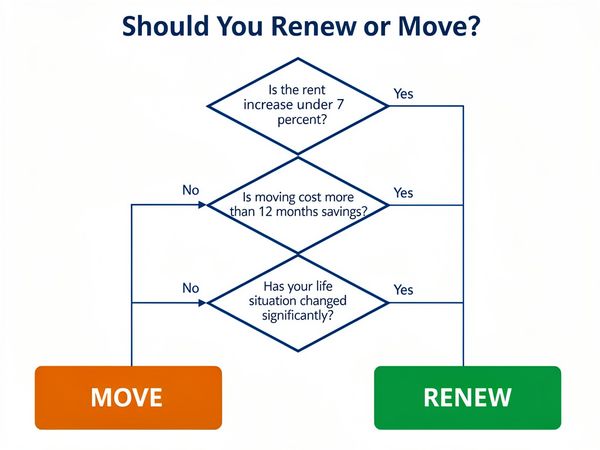
Should I renew my lease or move? This depends on a cost comparison. If the moving costs (deposits, movers) exceed 12 months of rent savings, renewing is usually the better financial choice. However, if your life circumstances have changed significantly, moving might be necessary despite the cost.
How much notice do I need to give if not renewing? Most standard leases require 30 to 60 days of written notice. Check your specific lease agreement for the exact requirement to avoid penalties.
Can I negotiate a lease renewal? Yes, most landlords prefer retention over vacancy. You can negotiate rent, lease terms, or upgrades if you have a good payment history.
What if my landlord won’t budge on the rent increase? If they refuse, you can counter with a longer lease term (18-24 months) or request minor upgrades as an offset. If they still won’t move, you may need to look at market options.
Is it worth moving to save $100/month? Probably not after moving costs, which often range from $800 to $3,500. Savings of $200+ per month usually justify the move within a year.
The Bottom Line
The decision to renew or move boils down to stability versus savings. If your current home meets your needs and the rent is reasonable, staying saves you thousands in moving costs and stress. If the rent hike is aggressive or your life situation has shifted, moving is a valid investment in your future.
Before making your final call, review the new lease terms carefully using our apartment lease agreement explained guide. If you choose to stay, try to secure better terms with our how to negotiate rent tactics. If you choose to leave, ensure you protect your deposit by following proper procedures found in our notice to vacate letter template. Make the choice that keeps your budget and your peace of mind intact.