Rental Scams Explained: How to Spot Fake Listings and Stay Safe
Rental scams are common because renters are often in a rush. When a move date is close and listings are disappearing fast, it is easy to skip steps that would normally keep you safe.
This guide is general information, not legal advice. It explains how rental scams work, the most common red flags, and a calm, step-by-step way to verify a listing before you send money.
If you have ever felt pushed to apply without a tour or to send money to "hold" a unit, you already know how the pressure feels. Scammers use that pressure to override your caution. The goal here is to give you a simple process you can repeat every time.
Key takeaways {#key-takeaways}
- Scammers use urgency and emotion to push quick decisions.
- Most scams share a small set of warning signs.
- Verification is simple when you follow a checklist.
- Do not send money until you confirm the listing and the owner.
- Keep communication in writing and save everything.
Why rental scams are so common {#why-common}
Scams are common because the rental market is competitive and fast. Scammers rely on speed and stress to get people to act before they verify.
High demand and urgency
When good listings disappear quickly, renters feel pressure to move fast. Scammers copy that urgency and push for quick deposits.
Peak move months make this worse. When the market is crowded, even legitimate landlords can be slow to respond, and scammers use that confusion to look more believable.
Online listings without verification
Many sites allow anyone to post a listing. That makes it easier for scammers to use real photos and fake details.
Social media groups and community boards can be helpful, but they are harder to verify. Treat private messages and listings that disappear quickly with extra caution.
Why first-time renters are targeted
First-time renters may not know normal processes or local rules. Scammers target that uncertainty and use vague answers to avoid verification.
They also target renters who are relocating and cannot tour in person. If you are moving from out of town, you need stronger verification steps, not fewer.
Pro tip: If a listing feels rushed or confusing, slow down. A real landlord will answer basic questions and provide documentation.
The most common rental scam types {#scam-types}
Most scams follow a few predictable patterns. If you know these patterns, you can spot them early.
Fake landlord or fake owner
The scammer claims to be the owner or manager but cannot show proof of ownership or access to the property. They often say they are out of town and need money before you can see the unit.
If they claim to be the owner, ask for a simple proof that connects them to the property or management company. Real owners expect this question.
Copy-paste listings
Scammers steal photos and descriptions from real listings and repost them with a lower price. The goal is to lure you with a deal that looks too good to ignore.
If you see the same photos across different websites with different prices or contact names, stop and verify. That mismatch is a common scam signal.
"Too good to be true" pricing
If a listing is far below market rate, it might be a scam. A low price is often used to override your caution.
Warning: A great deal is not impossible, but it should still come with a normal application process and a real tour.
Application fee harvesting
Some scams focus on collecting application fees or personal data. They may ask you to fill out a form before a tour and request sensitive information too early. A legitimate process usually starts with a tour, then an application with clear terms.
Bait-and-switch listings
The listing looks great, but the unit is "no longer available" and you are pushed toward a different unit with worse terms. This is a common way to pressure renters into fast decisions.
Rental scam red flags to watch for {#red-flags}
A single red flag is not always proof of a scam, but multiple red flags mean you should stop and verify.
Pressure to send money
Scammers want deposits or application fees before you see the unit. Legitimate landlords will schedule a tour before asking for money.
Refusal to show the property
If they will not show the unit or claim it is "locked" or "under renovation" with no access, that is a major warning sign.
Payment method warnings
Requests for wire transfers, gift cards, or cash apps with no receipts are common scam tactics. A standard process usually includes a formal application and written confirmation.
If the person refuses to provide a receipt or insists on a "friend and family" payment, pause. A legitimate process creates a paper trail.
Vague or inconsistent details
If the listing details change or the person avoids basic questions, it may be a scam.
Pay attention to the address, utilities, and move-in date. If these change every time you ask, treat that as a warning sign.
Communication that feels off
Poor grammar alone is not proof, but aggressive, evasive, or overly pushy communication is a signal to pause.
If the conversation moves off-platform quickly or the person refuses to use email, consider that a red flag. Written communication protects you and helps you document the process.
How to verify a rental listing step by step {#verify}
Use this simple sequence before you send money. It is easier than it looks.
Step 1: Cross-check the address
Search the address online and compare photos, layout, and rent price. If the same photos appear in multiple listings with different prices, pause and verify.
You can also look for older listings of the same address. If the photos or descriptions do not match, ask why. It might be a new listing, but it might also be copied from elsewhere.
Step 2: Confirm who owns or manages the property
Look for public records or official management websites that match the name you are speaking with. You do not need to dig deep; you just need to see that the person has a real connection to the property.
If the listing claims a management company, verify the company website and call the main number listed there, not the number in the listing.
Step 3: Ask safe, specific questions
A legitimate landlord should be able to answer questions like:
- When was the unit last occupied?
- What utilities are included?
- What is the standard application process?
- Can I tour the unit or attend a walkthrough?
If the person cannot answer these questions clearly, pause and verify before you continue.
Step 4: Tour the property or have a verified representative do it
In-person is best. If that is not possible, ask for a live video tour that shows details you request in real time.
Pro tip: Ask them to show you a specific feature during a live video call, like the thermostat or a cabinet under the sink. That makes it harder to fake.
Step 5: Use a written application process
A real application includes a clear list of requirements and a written explanation of fees. If that is missing, pause.
If you are asked for sensitive information before you tour or verify the property, do not send it. It is OK to say you will submit information after a tour.
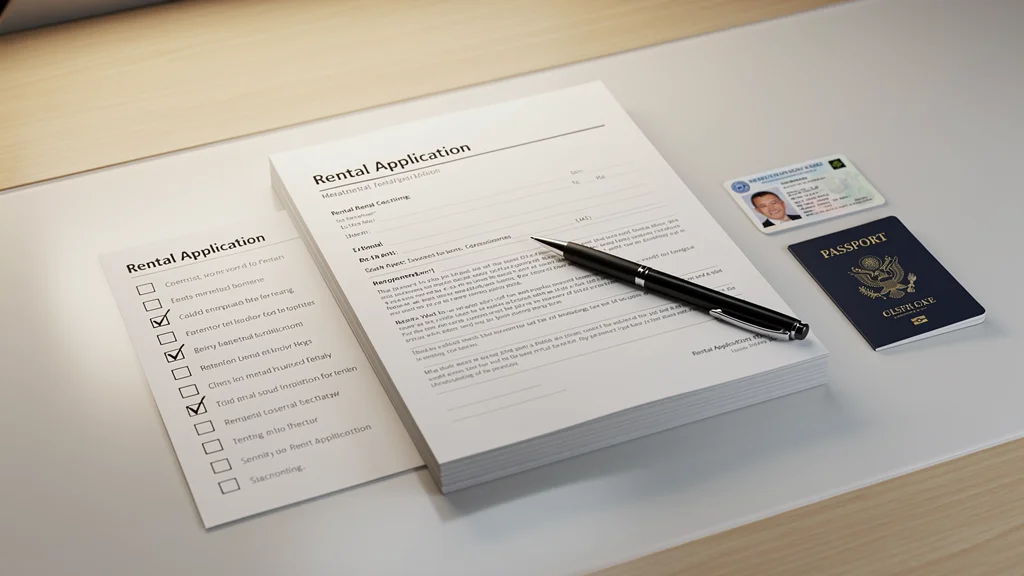
If you want a normal flow to compare against, use the Apartment Tour Checklist and the Rental Application Checklist. If the listing checks out, confirm affordability with the Rent Budget Checker.
Printable Checklist: Scam safety checks {#checklist}
Listing verification
- The address matches photos across multiple sources
- The rent price is in line with similar units
- The listing includes clear details and contact info
Owner or manager verification
- The person can show proof of ownership or management
- The email or phone matches the listed company
- The process includes a written application
Before you pay anything
- You have toured the unit in person or live video
- You received a written fee breakdown
- You confirmed the payment method is standard
Tip: Save this page or screenshot this checklist for later.
A quick real-world example
Example: Jordan finds a listing that looks perfect and priced lower than other units in the area. The "owner" says they are traveling and asks for a deposit to hold it. Jordan asks for a live video tour and the owner refuses. Jordan checks the address online and finds the same photos in a different listing with a different contact name. Jordan stops communication and avoids a likely scam.
What to do if you suspect a scam {#what-to-do}
If something feels wrong, stop and protect yourself. You do not owe anyone a fast decision.
Stop communication and payments
If you have not paid, do not pay. If you have paid, stop future payments immediately.
If you paid by card or bank transfer, contact the provider right away to ask about dispute options. The faster you act, the better your chances.
Document everything
Save emails, texts, listing screenshots, and payment receipts. Documentation makes it easier to report later.
Include the date, time, and platform where you found the listing. That detail helps platform support teams remove fraudulent listings faster.
Report the listing
Most listing sites have a report or flag button. Use it so others do not get caught.
If the scammer used a platform name or company, report that too. It helps protect other renters.
Where to report (general guidance)
You can also report suspected scams to local consumer protection offices or the platform where you found the listing. For serious cases, you can contact local authorities. This is general information, not legal advice.
If you want to understand typical screening steps, review Tenant Screening and Credit Checks for Renters. Knowing the normal flow makes scam signals much easier to spot.
FAQ {#faq}
Are rental scams common?
Yes. Scams appear most often in high-demand markets or during peak move seasons, when renters feel pressure to move quickly.
Can verified platforms still have scams?
Yes. Even large platforms can have bad listings. The best protection is to verify the listing yourself.
What payment methods are safest?
Use payment methods that provide documentation and receipts. Avoid wire transfers or gift cards for deposits.
Is it safe to pay an application fee before touring?
Generally no. A standard process allows a tour first, then an application with clear terms and fees.
Should I sign a lease before seeing the unit?
No. Always see the exact unit or a verified unit in the same building with documented details before signing or paying a deposit.
What should I bring to a tour to verify the listing?
Bring the listing details, questions about utilities and fees, and a phone to take notes. Compare what you see to the listing description before you apply.
Next steps {#next-steps}
- Use the Apartment Tour Checklist to prepare for tours.
- Gather documents with the Rental Application Checklist.
- If you are new to renting, start with the First Apartment Checklist.
Rental scams thrive on pressure. A calm, repeatable verification process is your best defense. If something feels off, slow down, verify, and trust the checklist.